

Share this page:


What do the various parts of BS 476 tell us?
Why you need to know before choosing building materials for your tower
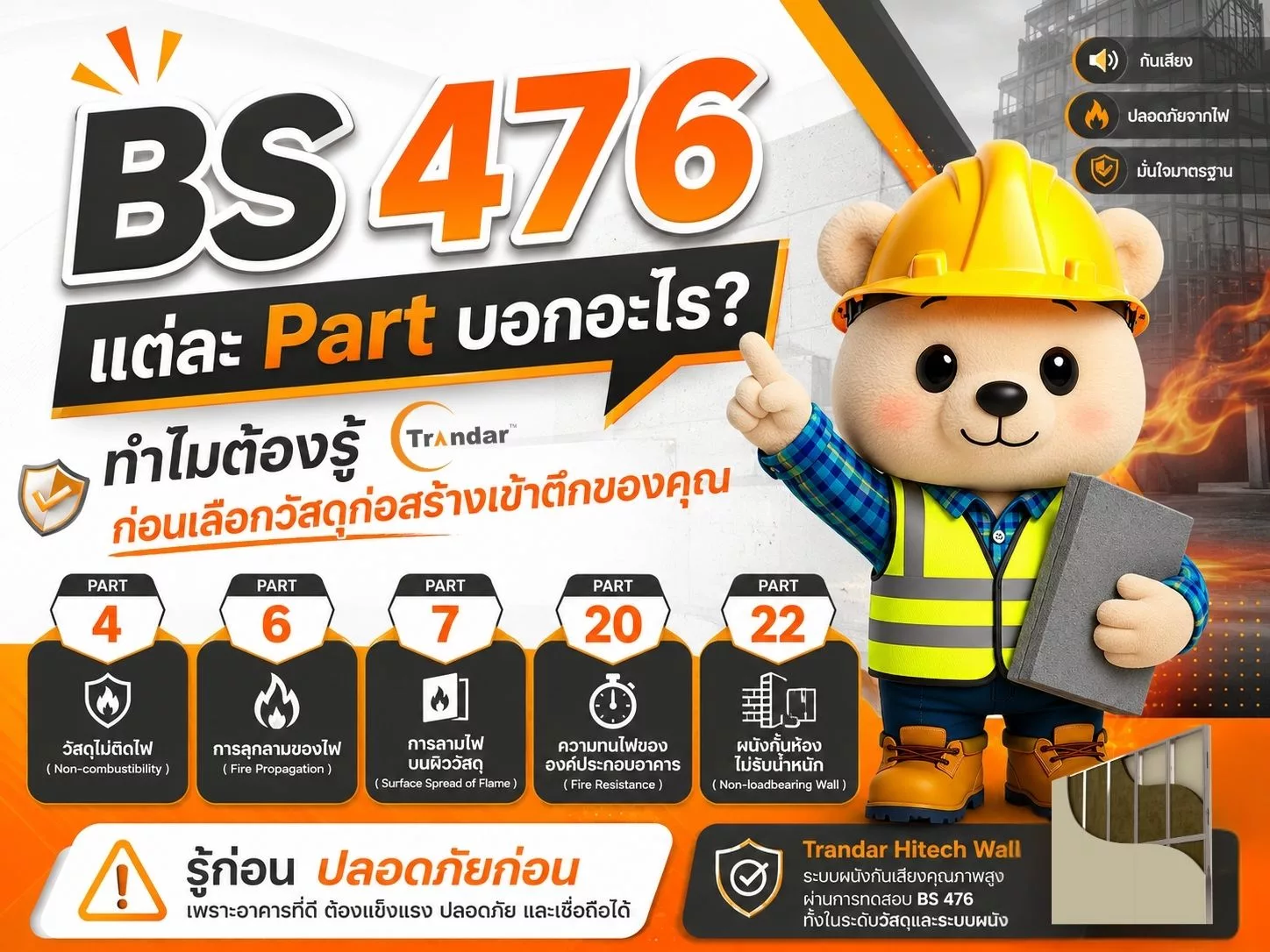
Many people choose materials based on aesthetics, price, or acoustic ratings
But there is another equally important matter... "How do those materials behave when a fire breaks out?"
If the material does not ignite and does not increase the furnace temperature beyond the specified threshold, it is considered to have passed the non-combustibility test, meaning it is "non-combustible."
If the material itself is combustible, when a fire occurs, it immediately adds fuel to the fire, causing it to burn more intensely.
Some materialsmay not ignite easily, but when exposed to fire,they can release a large amount of heat energy.
This heat is the fuel that allows the fire to expand more rapidly.
BS 476 Part 6 therefore tests how much that material contributes to fire propagation
The test results are reported as the Fire Propagation Index (I). The lower the value, the better.
This means the material releases less heat and contributes less to the spread of fire.
The material may
Suppose a fire starts on a wall. The question is: how fast will the flames travel across the wall?
Part 7 therefore tests Surface Spread of Flame orthe spread of flames across material surfaces
Results are classified into
Materials achieving Class 1
mean that flame spread across the material surface is minimal under test conditions. If a material spreads fire quickly,the fire will travel rapidly along walls and ceilings,increasing the likelihood that
Many people misunderstand that non-combustible material = fire-resistant wall. In reality, this is not the case,because even if individual materials are non-combustible,when assembled into an actual wall,there may be
All of these can happen
Hence the standard BS 476 Part 20
This standard specifies the principles and methods for testing the fire resistance of building elements by simulating standard fire conditions using a furnace and a Standard Time-Temperature Curve to evaluate how long building elements can maintain their performance.
Wall systems are evaluated based on 3 key aspects
Whether the wall can stillprevent flames and hot smoke from penetratingor not. If cracks develop allowing fire to pass through,it is considered a failure.
Whether the opposite side of the wallbecomes too hot. If heat penetrates enough to ignite materials on the opposite side,it is considered a failure.
For load-bearing elements, it evaluates whether they can still support loads without collapsing (this criterion applies primarily to load-bearing elements).
are expressed as 30 / 60 / 90 / 120 / 180 minutes. The longer the time, the more it enhances evacuation time and fire control efforts.
Part 22 takes the principles of Part 20 and applies them tonon-loadbearing walls,such as
as well as certain types of doors, glass walls, and non-loadbearing ceilings within the scope of the standard
Becauseeven if
but if they are assembled poorly, the wall systemmay fail sooner than expected. Therefore,this standard tests the "actual system" as installed in the buildingrather than testing individual materials separately
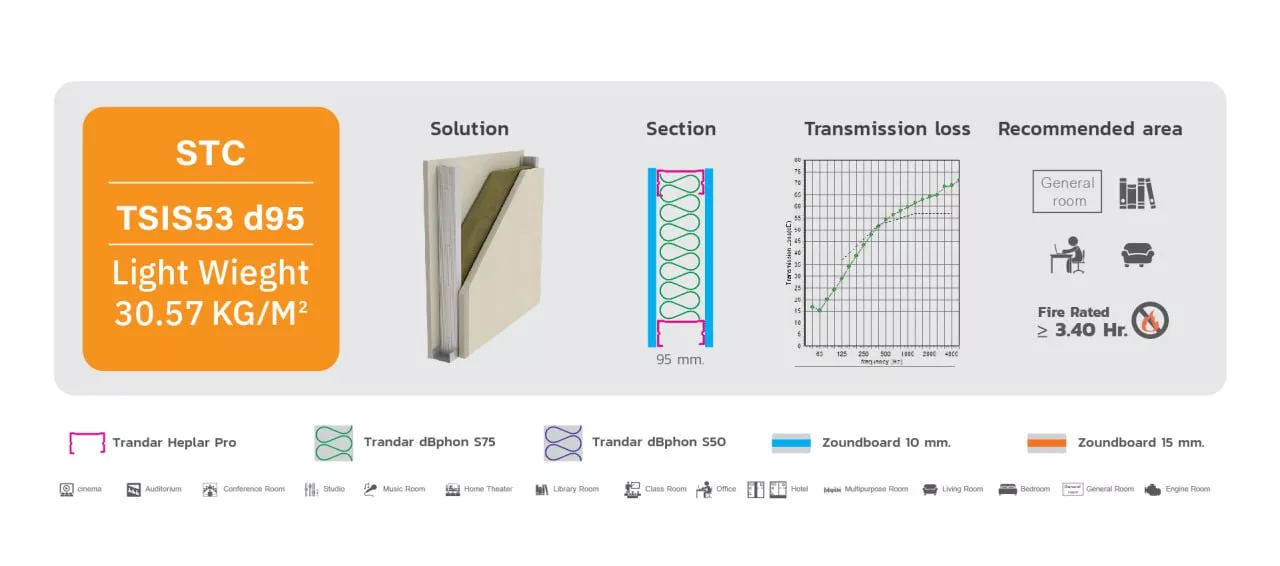
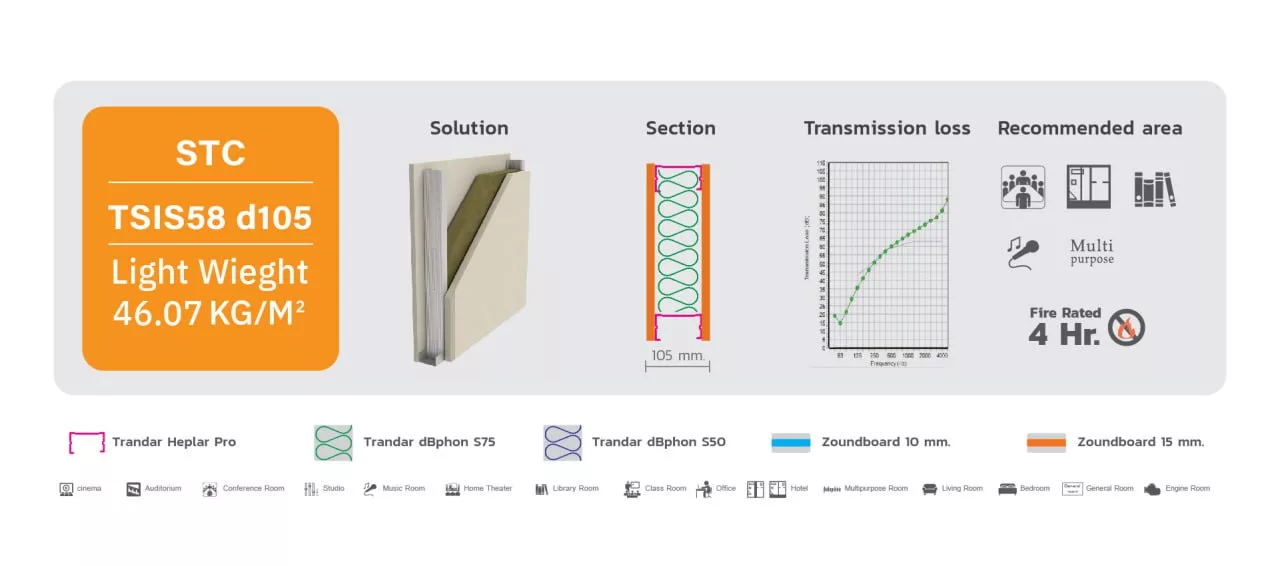
The Trandar Hitech Wall acoustic wall system is not only designed for "sound insulation", but also prioritizes fire safety.
✅ BS 476 Part 6 : Fire Propagation
✅ BS 476 Part 7 : Surface Spread of Flame
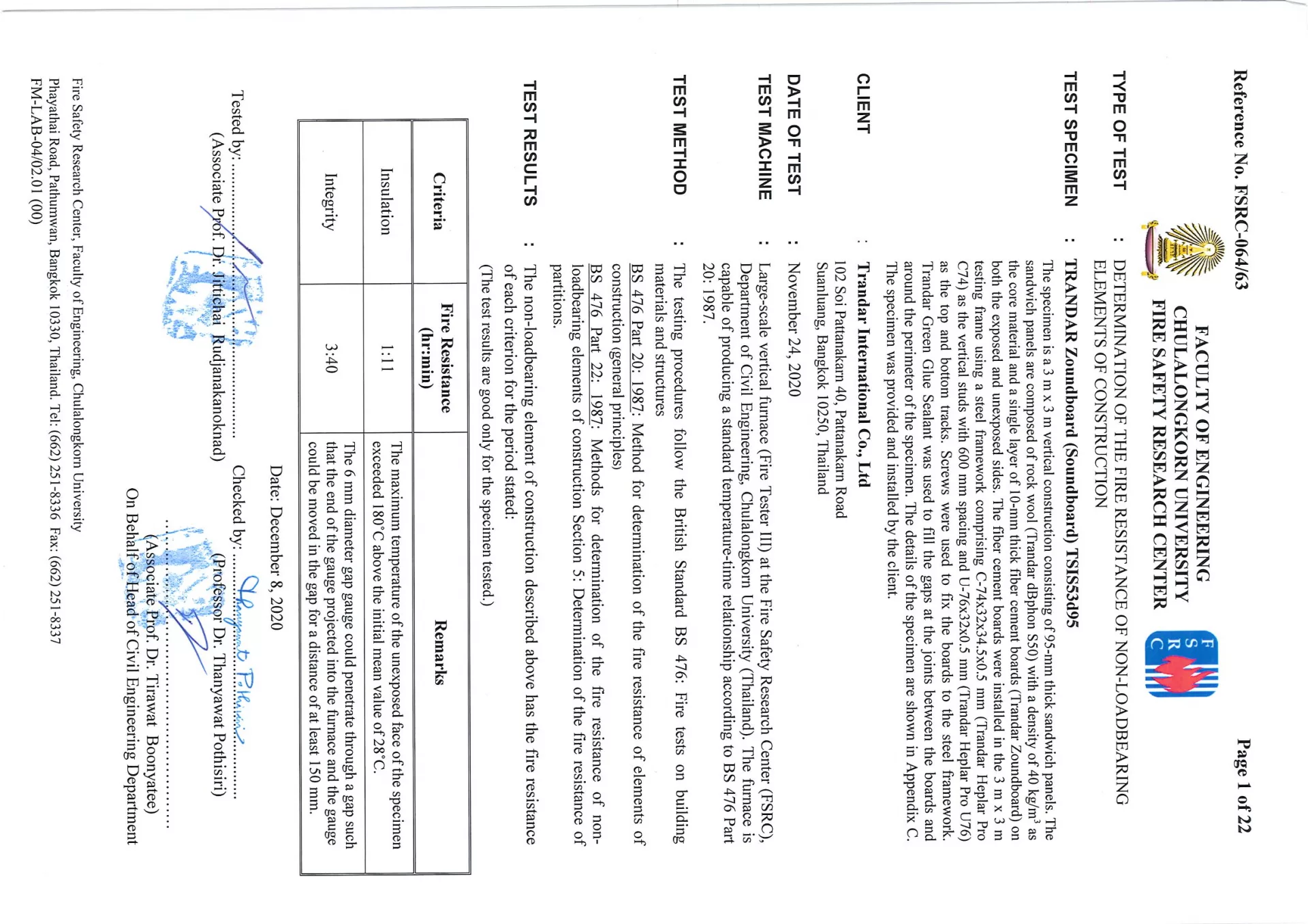
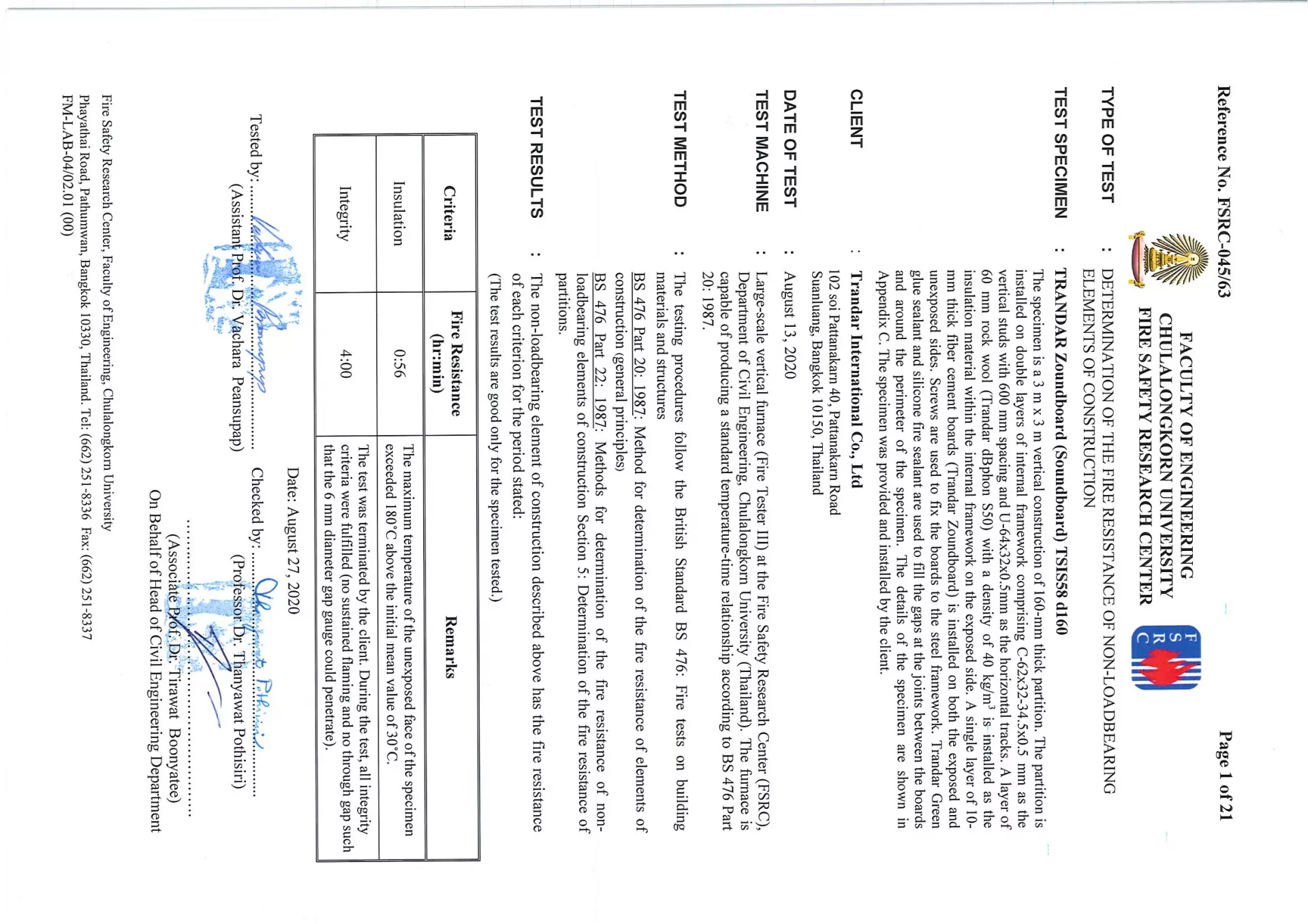
✅ BS 476 Part 20 & Part 22 : Fire Resistance testing of Non-loadbearing Wall Systems, evaluating the ability to block flames and heat,
and maintaining wall integrity under standard fire conditions for over 220 - 240 minutes
When used in combination with
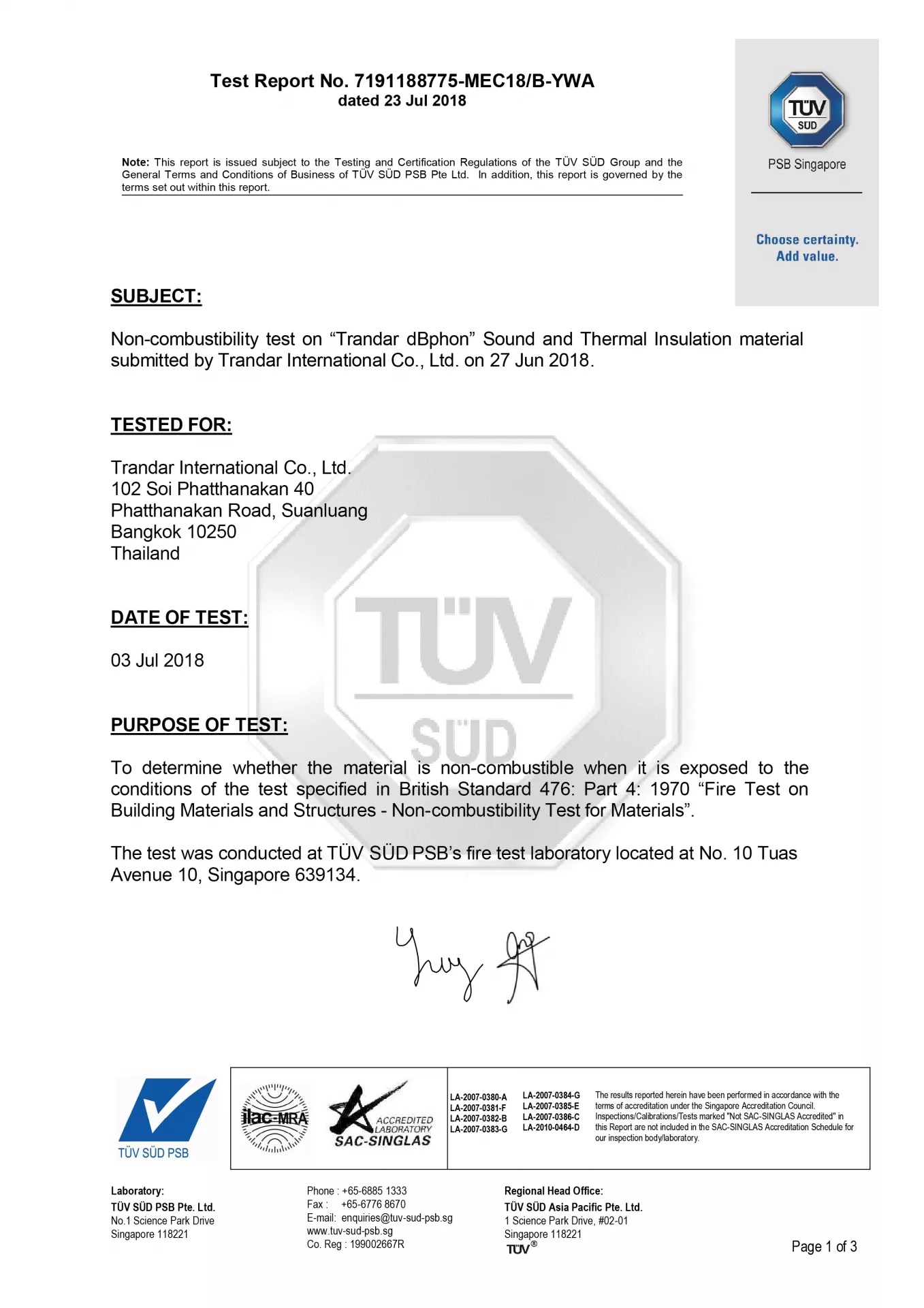
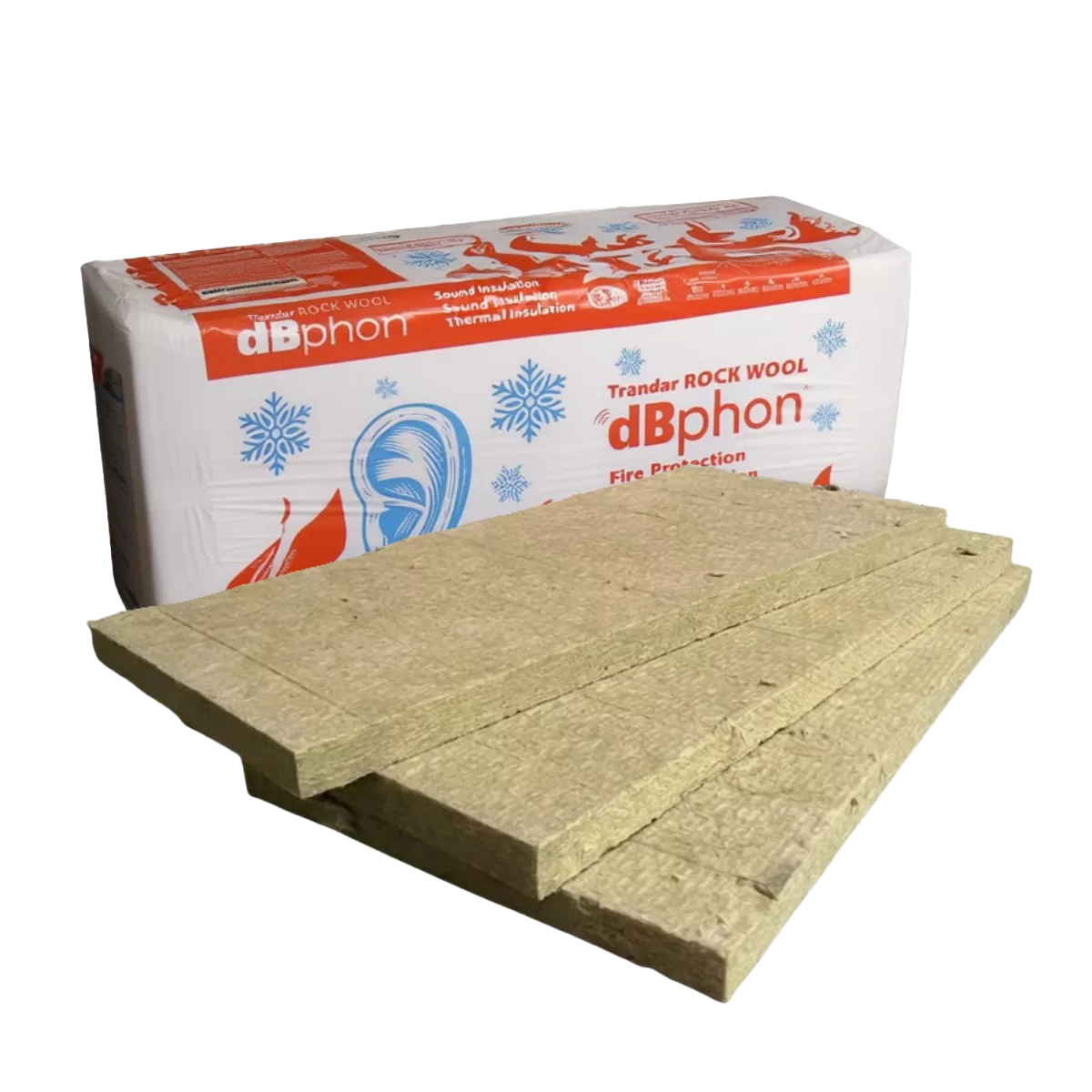
Trandar dBphon which has passed ✅ BS 476 Part 4, it ensures the wall system delivers both
Making it the ideal solution for both acoustic insulation and fire safety for high-standard buildings.
Inquire/order Trandar Acoustics products at
🛒 Website : www.trandar.com/store/
📱 Line OA : @Trandaraocoustic https://lin.ee/yoSCNwF
📱 Line OA : @Trandarstore https://lin.ee/xJr661u
☎️ Tel : 02-722-7007
Your email will not be displayed. Required fields are marked with *
 ไทย
ไทย
 中文
中文
 日本語
日本語
 한국어
한국어
 English


