

Share this page:


"Fireproof" — Is this word truly accurate for interior building materials?
Let's clear up common misunderstandings about fire safety in construction.
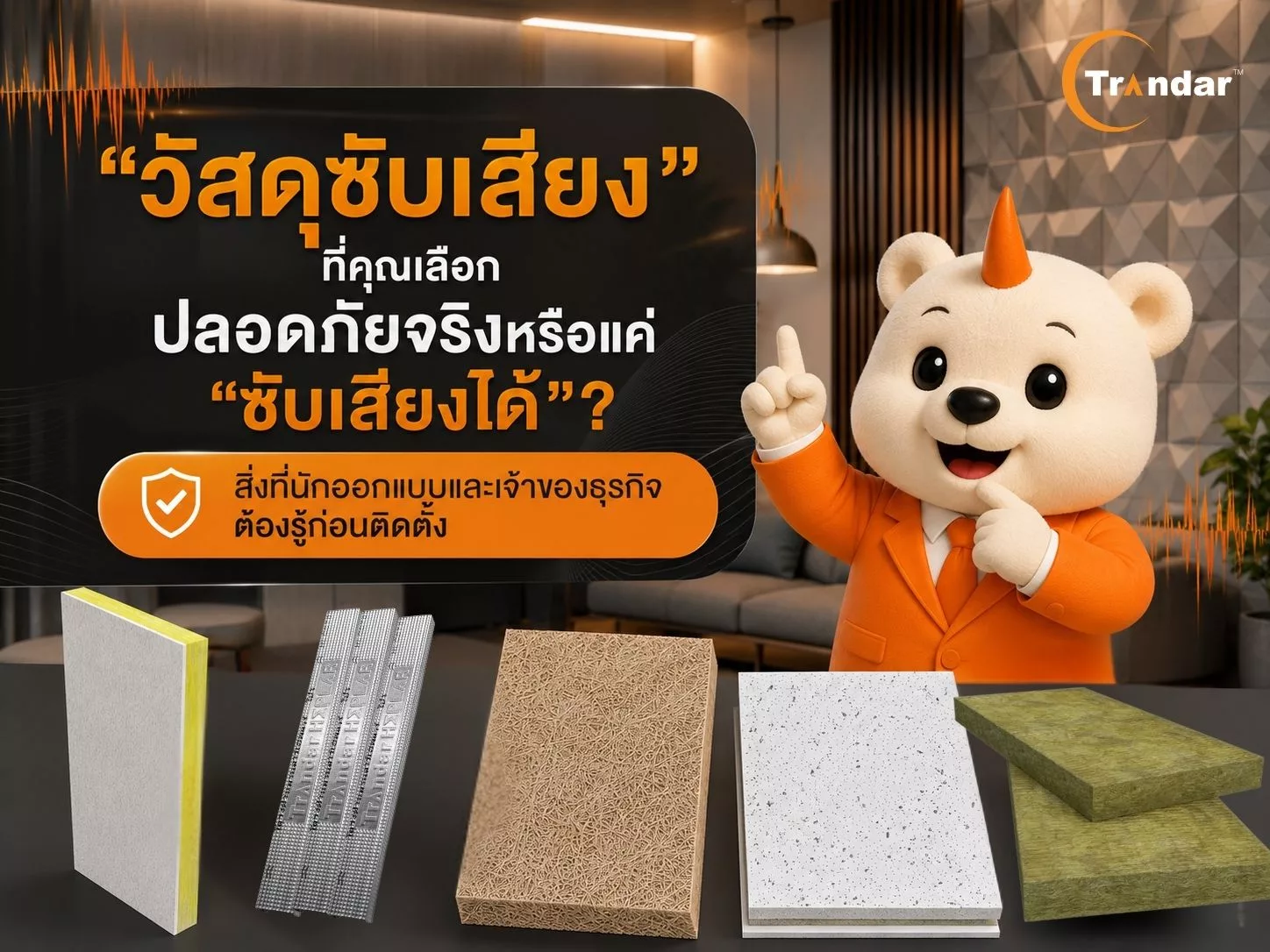
When planning construction projects, the term "fireproof" is frequently encountered across specifications, architectural plans, and material documents. However, in reality, building codes and fire safety standards do not actually use the word "fireproof" in their official terminology, as no material is completely indestructible by fire under extreme conditions.
Understanding the correct technical terminology is therefore essential for designers, contractors, and project owners to select materials appropriately and ensure buildings comply with legal safety standards.
1) "Fireproof" is not the same as "Fire-resistant" — A common distinction among building materials
To begin with, let's look at the basic differences in acoustic and interior material performance:
Back to fire safety: No building material is truly 100% fireproof. While certain insulation materials like PE Foam, PU Foam, or general porous acoustic materials may claim fire-retardant properties, they can still burn, melt, or produce toxic smoke under intense heat.
Another critical hazard often overlooked is "Flaming Droplets" — molten burning material dripping from overhead during a fire, which can spread flames downward and cause secondary fires or severe burns to evacuees.
Therefore, selecting Fire Retardant materials helps slow down flame spread, reduce smoke generation, and buy precious time for building occupants to evacuate safely before structural collapse occurs.
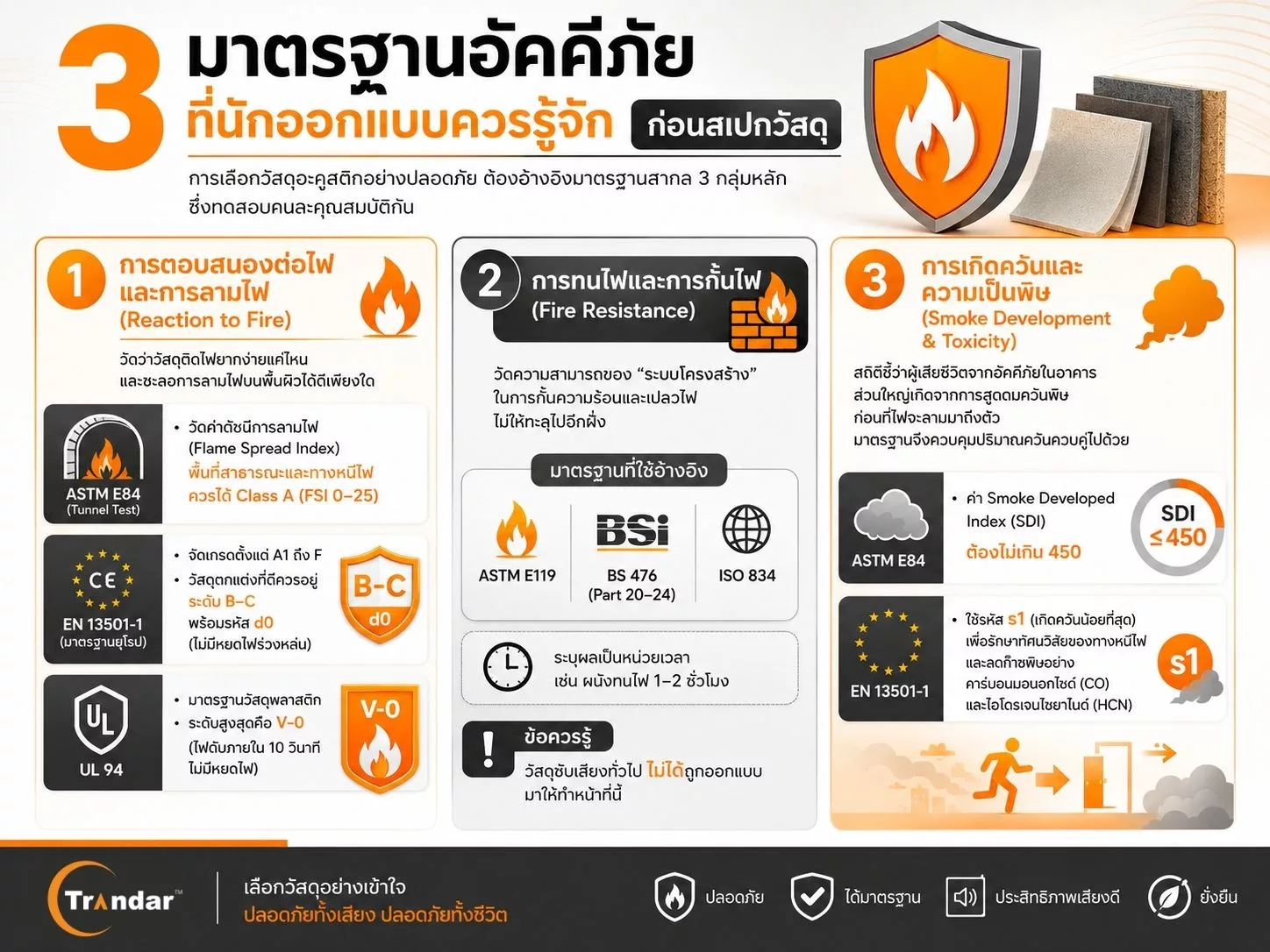
2) 3 key standards for evaluating fire-safe building materials
When specifying interior and architectural materials, professionals generally refer to 3 main criteria:
2.1 Reaction to Fire
Measures how easily a material catches fire and contributes to flame spread.
2.2 Fire Resistance
Refers to structural endurance under fire exposure — how long a wall, partition, or assembly can maintain its load-bearing capacity, integrity, and insulation without collapsing or allowing heat to pass through. Tested according to standards like ASTM E119, BS 476 (Part 20–24) or ISO 834, typically rated in hours (e.g., 1–2 hours fire rating).
2.3 Smoke Development & Toxicity
Dense smoke is often a major cause of casualties during fires, as it reduces visibility and can contain toxic gases such as carbon monoxide (CO) or hydrogen cyanide (HCN).
3) Key standards applied in practice
To ensure maximum safety, interior ceiling and wall systems typically require compliance across 2 key categories:
4) Reliability and Professional Brand Reputation
In addition to compliance with material standards, project owners and designers should also consider brand reputation. Factors such as Site Inspection — on-site sample checks to ensure materials match specified requirements, preventing substandard substitution — and product Traceability are critical. These elements ensure the highest standards of quality control and reliability throughout the project lifecycle.
Choosing the right materials is not just about meeting basic technical specifications; it is about partnering with a reliable brand that delivers certified quality, safety, and long-term project success.
5) Trandar Acoustics Standards
Trandar Acoustics is committed to developing high-performance interior construction materials that meet rigorous international safety standards. Key highlights include:
Summary : Ultimate Safety for Modern Interiors
Selecting the right interior construction materials goes beyond aesthetics; it is about prioritizing safety, compliance, and reliability. Understanding key standards such as Reaction to Fire, Fire Resistance, and Smoke Development ensures that your projects are safe and sustainable. For professional consultation and premium acoustic solutions, partner with Trandar Acoustics to elevate your architectural designs with certified safety and uncompromising quality.
For comprehensive technical support and inquiries regarding fire-rated acoustic materials, Trandar Acoustics' expert team is always ready to assist you.
Enhance your projects with Trandar Acoustics' certified fire-rated materials featuring Class A ASTM E84 (s1 smoke rating) and d0 rating, backed by 100% verifiable international certificates and rigorous quality control.
Inquire/order Trandar Acoustics products at
🛒 Website : www.trandar.com/store/
📱 Line OA : @Trandaraocoustic https://lin.ee/yoSCNwF
📱 Line OA : @Trandarstore https://lin.ee/xJr661u
☎️ Tel : 02-722-7007
Your email will not be displayed. Required fields are marked with *
 ไทย
ไทย
 中文
中文
 日本語
日本語
 한국어
한국어
 English


